
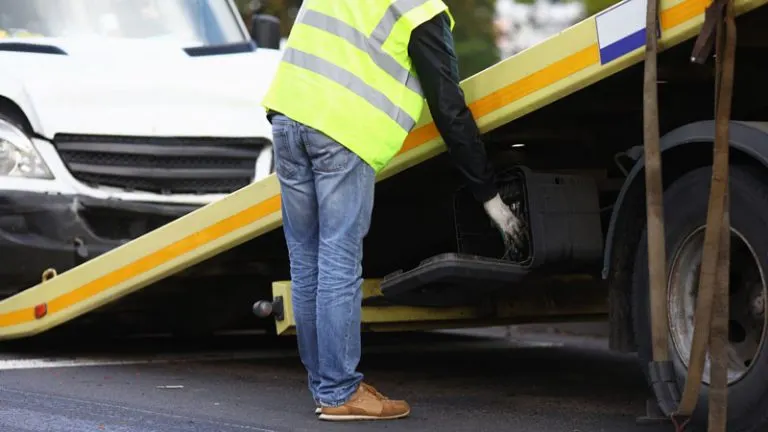
As REAC continues with its #NIUNOMÁS! campaign, it is worth reflecting constructively on the sector’s own vulnerability. In a context of awareness-raising about road violence.
Although every death of a professional on the road matters, it seems that the one on 19 November in Alhaurín de la Torre (Málaga) was a turning point for the roadside assistance sector. The #NIUNOMÁS! campaign has been spread far and wide across the country thanks to the initiative of the Roadside Assistance Companies Network (REAC).
Each and every one of the members has joined this movement with conviction, given the alarm and distress caused by accidents involving roadside assistance operators.
What should take shape as a platform, still in preparation for the moment, has become a demand addressed to the Directorate-General for Traffic (DGT) itself. This important institution is being asked to design a communication campaign to make the average driver aware that they are not alone on the road.
An ever-wider community of vulnerable road users

There has been a lot of talk recently about so-called “vulnerable road users”. Who would make up this group, as far as road safety is concerned? In principle, cyclists, motorcyclists and pedestrians. But sustainable mobility has brought more vulnerable profiles: a vulnerable user would be, for example, someone riding a PMV (Personal Mobility Vehicle (PMV).
In addition, the ageing of the population also affects how people over 65 are considered; sadly, in 2019 they accounted for almost a third of all road traffic deaths, and 54% of deaths among pedestrians. People with disabilities or reduced mobility and orientation (PRM) have also joined the group of vulnerable road users.
What about our sector?

At this stage, REAC considers that working on the road makes professionals vulnerable. The figures for accidents involving tow-truck drivers speak for themselves; they are often hit by vehicles of varying size that have not seen them. These are accidents for which, for the time being, no official annual reports are available.
Let us remember that one of the new features of Royal Decree 159/2021, approved last year, was precisely the obligation to enhance visibility with retroreflective material on a third of the tow truck’s surface.
There is a conviction that this scourge should begin to be alleviated, above all, with a good dose of public awareness. One of the requests that organisations such as REAC are making to the DGT is for the road signs to report on tow-truck operations when they are carrying out a roadside rescue. Not to mention a far-reaching media campaign. Will it be possible one day? Let us hope so.