
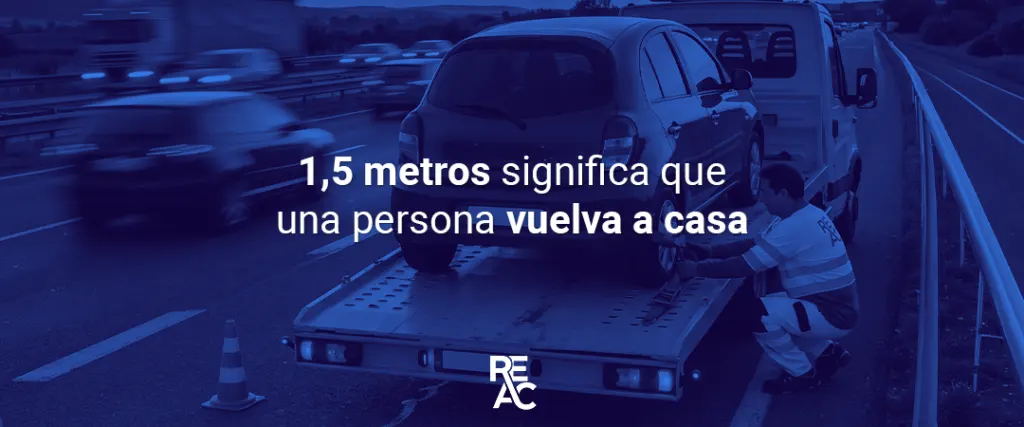
For a roadside assistance operator, carrying out a job on the public road means working just centimetres away from cars and heavy vehicles travelling at more than 100 km/h. In this high-risk environment, lateral safety distance is not a mere detail of road courtesy: it is the physical barrier that makes the difference between a safe job and a workplace tragedy.
The invisible danger of high-speed passes
The aerodynamic slipstream and suction effect generated by vehicles passing at high speed close to the hard shoulder pose a constant danger to professionals working at road level. A brief lapse of attention at the wheel or getting too close reduces the worker's margin for reaction to zero in the event of the unexpected.
For this reason, at the Red de Empresas de Auxilio en Carretera (REAC) we insist on the need to build a genuine culture of respect and protection towards rescue personnel.
Protocol for drivers approaching a roadside assistance job
1. Progressive speed reduction
As soon as you spot the flashing amber lights of a tow truck on the carriageway or hard shoulder, ease off the accelerator. Slowing down sufficiently in advance avoids sudden braking and reduces the aerodynamic impact when passing the work zone.
2. Changing lanes to the left
Whenever road and traffic conditions allow, leave the lane next to the hard shoulder by moving into the left-hand lane. This manoeuvre creates a safety corridor that protects the physical integrity of the roadside assistance operator and of the users being assisted.
3. Maintaining the 1.5-metre margin
On secondary roads or stretches where it is not possible to change lanes, it is mandatory to leave a minimum lateral space of 1.5 metres when overtaking the tow truck. This distance provides the vital space needed for hitching and loading manoeuvres to be carried out without risk.
A shared responsibility on the road network
Road safety is a collective endeavour. Respecting safety distances and anticipating the presence of emergency services is the best tool for ensuring that all the professionals who look after our mobility return home safely at the end of their working day.
Do you want to promote road safety in your company or fleet?
Discover our awareness tips and assistance protocols by visiting REAC's resources section.