Skip to content
REAC · Red de Empresas de Auxilio en Carretera
  1. Home
  2. Services
  3. Training

Train with the best

The best training for managers, call-centre operators, roadside assistance operators and mechanics.

Business owners and managers

The complexity of regulations in Spain makes it very difficult, in most cases, for business owners to comply with them. Occupational risk-prevention legislation is no exception. Business owners face a serious problem when trying to comply properly with its provisions.

The main question business owners must ask themselves is when they can be sure they are doing it correctly. Simply hiring an external prevention service is not enough; in fact, it is merely support for all the actions the company must carry out. It must be stressed that responsibility lies entirely with the business owner. It is therefore essential that business owners have the fullest knowledge of their obligations and responsibilities and, logically, those of the other parties involved: workers, prevention services, subcontractors, etc.

Course for Business Owners and Managers

Basic prevention legislation and regulations, basic and implementing legislation. Types of penalties, legislation and regulations specific to the roadside assistance sector, functions, obligations and responsibilities.

Integrating prevention into company management. Integration with the different systems (quality and environment). Total management. Organisation and planning.
Roadside assistance operators

Level 1 operator

Entry-level or newly recruited operator who will carry out only the transport of light vehicles not exceeding 3,500 kg in weight.

On-site repairs of minor vehicle breakdowns, as set out in the procedures.

Level 2 operator

Qualified operator with the ability and experience to carry out more complex operations, recoveries at the same level and at a different level on negative gradients (not vertical). Handling and lifting of loads with a self-loading crane at the same level.

Highly Qualified Level 3 operator

Highly qualified operator with extensive experience and proven knowledge and ability in carrying out tasks in the most complex scenarios, recoveries at a different level on negative gradients, recovery of light vehicles from a vertical drop using a self-loading crane. Recovery of overturned and partially overturned light vehicles, including oversized vehicles at their maximum dimensions. Recovery of vehicles classified under the ADR.

Call-centre operators

Courses for Call-Centre Operators (central coordination operator)

A concrete and specific description of the roadside assistance sector, assessment of the main constraints and their risks, how to assess the work to be done, how to carry out the work safely, and establishing specific coordination protocols.

Mechanic operator

Specific Safety and Environment training for transferring flammable liquids from a vehicle's tank, handling them and finally managing them as waste.

Training and technical assistance in vehicle repairs covering electrical and electronic problems, road safety and the Environment.

Responsibilities of the mechanic operator.

Middle managers

To make strategic changes in companies and implement them quickly, middle managers are essential: they take on objectives quickly because they know the business, and they manage to steer their team towards the goal.

Train in the Roadside Assistance sector

Training tips · Health and Safety Committee

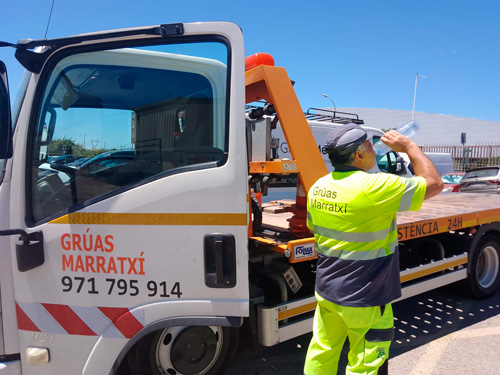
Tow-truck operator drinking water

1. Hydration

  • Drink plenty of water and reduce exposure to the sun as much as possible.
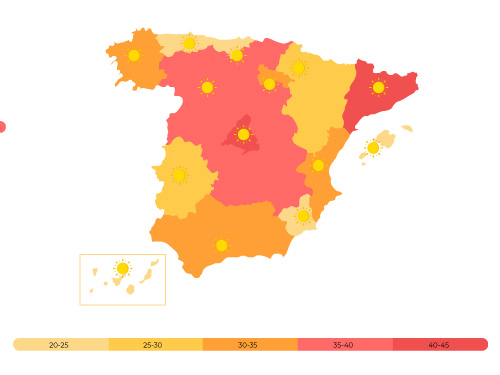
Heat map of Spain

2. High temperatures

  • Pay attention when driving.
  • Eat lighter meals.
  • Respect rest periods, as heat causes drowsiness.
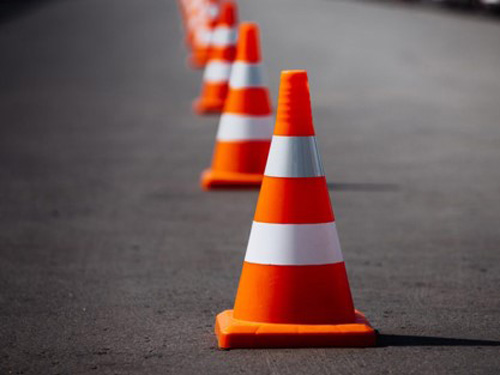
Cones on the road

3. Signalling and Protection · Part 1

The importance of placing cones

  • Placing cones strategically increases the operator's safety while showing drivers on the road where they should drive, increasing safety in the work zone.
  • Cones must be in good condition, as must the reflective strips.
  • The distance between cones must be 5 m to ensure proper visibility for vehicles travelling through the area.
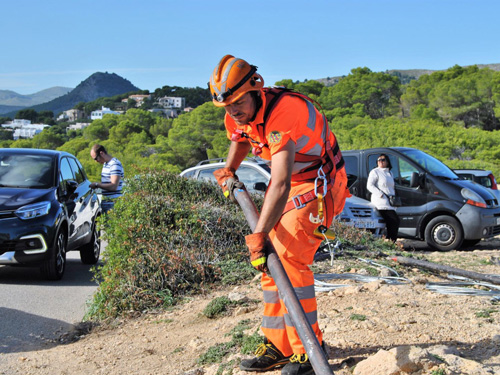
Roadside assistance operator wearing high-visibility clothing

3. Signalling and Protection · Part 2

High-visibility clothing

  • The visibility of a Roadside Assistance operator is improved by a high contrast between their clothing and the background of their surroundings.
  • High-visibility warning clothing is designed to signal the wearer's presence visually so that they can be detected in any lighting conditions.
  • The larger the area covered by Protective Equipment, the greater the protection for the worker.
Safety kit for roadside assistance operators

3. Signalling and Protection · Part 3

Stakes, helmet/cap, gloves and safety goggles

  • The main purpose of a safety helmet is to protect the head from any mechanical blow, impact or hazards of a mechanical, thermal or electrical nature.
  • Protective gloves cover the whole hand, preventing possible risks of amputation, cuts, burns and abrasions, and help workers do a good job thanks to features such as a non-slip grip.
  • Safety goggles protect us from splashes of chemicals, dust, wood and metal shavings, etc.

Do you know all the advantages of being part of REAC?

Discover