
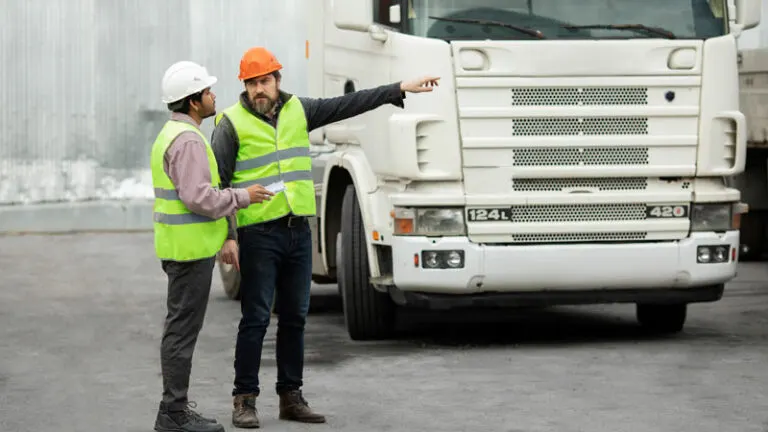
The national fleet consists of 10,000 vehicles with no impact on urban emissions. The organisation has put the proposal to the political parties standing in the forthcoming 28 May elections.
The National Roadside Assistance Alliance has approached the political parties standing in the forthcoming local and regional elections with proposals on mobility. In the organisation's view, this is a central issue in these elections, which is why it has asked the parties to exempt tow trucks from restrictions on driving in the so-called Low Emission Zones (LEZs) being introduced in cities. The Alliance's main argument is that these vehicles carry out an essential activity – as was demonstrated during the pandemic – and are key players in road safety, helping to improve traffic flow and ease congestion in cities.
Xavier Martí, the Alliance's spokesperson, has written to the various political parties with a message in which, in addition to expressing this idea, he adds that "the handling and traceability of recovered vehicles, up to, where applicable, their classification as waste, also depends on the direct action of roadside assistance". He thus emphasises the sector's contribution to sustainability and the environment, thanks to its work on urban and interurban roads.
The Alliance urges politicians to commit to free access and movement for assistance vehicles on public roads in LEZs, provided that these vehicles are accredited as such, and regardless of their environmental label.
10,000 tow trucks, 2,000 companies and 11,000 workers
These are the figures for a sector that carries out more than eight million roadside assistance and recovery services every year. The 2,000 companies that make up the trade, employing 11,000 people and operating 10,000 tow trucks, provide their services to clients comprising insurers, motoring clubs and travel assistance platforms – with which, moreover, the sector has been locked in a standoff for many months. This was the most recent chapter .
"The free movement of roadside assistance vehicles, mostly tow trucks and car transporters, is a basic pillar in keeping public roads clear, already recognised by traffic regulations through their exemption from traffic restrictions on interurban roads regulated by the Directorate-General for Traffic, in order to facilitate the essential work that roadside assistance represents," says the Alliance's letter.
Assistance vehicles, vehicles with right of way
Assistance vehicles duly entered in the Ministry of the Interior's State Register of Assistance on Public Roads (REAV) have right of way – when on duty – over other vehicles and road users. They are also authorised to stop and park on public roads in order to carry out their operations (always respecting road safety and traffic flow). This is set out in Royal Decree 159/2021, which regulates assistance services on public roads. This priority is due to the urgency of removing any obstacle on the public road – urban roads or peri-urban access roads – that hinders or prevents traffic, whether caused by a breakdown or an accident.
As with medical vehicles, assistance vehicles carry out very specific tasks. The small size of the fleet and the short distances it covers, for example, mean that the overall calculation of urban emissions is favourable for these vehicles. The balance in terms of public service and care for the environment is favourable for the activity. Hence the Alliance's electoral request.
The National Roadside Assistance Alliance is made up of the following regional and national associations and business organisations: ABEAC (Balearic Islands), ABEAC (Basque Country), ASCA (Catalonia), AMEAC (Madrid), ASCALEAC, (Castile and León), ASEDA (Andalusia), ASEGA (Galicia), AGRUAXA (Salamanca), ASEXTEAC (Extremadura), GRUPO CARTER (National), CEPAS (National), FEGRUAL (National Federation) AGREGA-GRÚAS and REAC (National Group).