
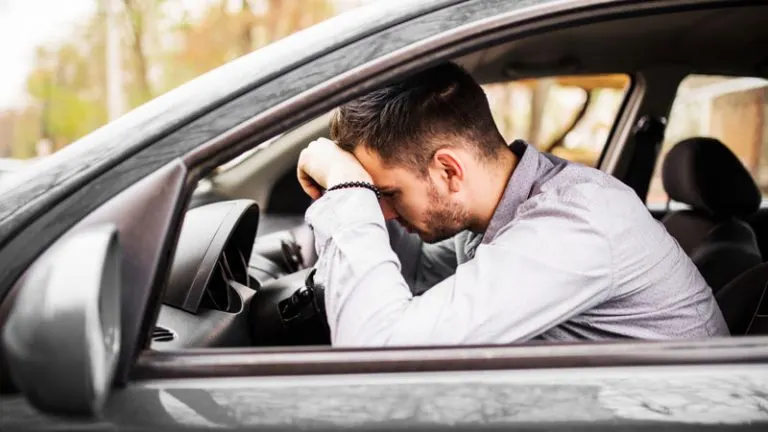
Having an energy drink or a stimulant when we feel sleepy at the wheel can help us fend off tiredness momentarily. Only momentarily, mind.
If the submarining effect, which we covered recently, is dangerous, the rebound effect in driving is no less so, linked to a lethal danger for those of us who drive for a living: fatigue. This is what happens when we have a stimulant drink: we only manage to apply a patch, since tiredness will return later, if anything even more strongly. That is the rebound effect. It also happens with some types of amphetamines, psychostimulants that activate the central nervous system and can likewise cause drowsiness.
This does not mean that drinks such as coffee or tea are not, in principle, useful for preventing drowsiness at the wheel. In the short term they may work, but delaying sleep does not mean we get rid of it. Tiredness, especially after many hours on the road, is persistent.
66% of bus drivers and 60% of hauliers admitted to regularly feeling fatigued at the wheel, according to a study by the European Transport Workers’ Federation (ETF) published by the DGT in 2021.
The fact that more than half of professional drivers make this admission should not surprise us, but it should worry us, given the possibility that this tiredness ends with them nodding off.
A few rules to combat fatigue at the wheel
Sleepiness is behind approximately 20% of road accidents. These are figures from the European Transport Safety Council (ETSC) and the Spanish Sleep Society, which point out the seriousness of this type of accident, usually involving a single vehicle running off the road. The early hours (between 3 and 5 in the morning) and mid-afternoon (between 14:00 and 16:00) are the most dangerous times.
Safe and responsible driving must go hand in hand with good rest. Driving while fatigued is extremely risky, especially on long journeys. What can we do to stop the rebound effect on the road?
- Before setting off, locate the rest areas closest to the route we are going to take.
- Stop at the slightest sign of tiredness, if possible in an area set aside for this purpose.
- Take a short walk and refresh and hydrate yourself with water.
- For every two hours at the wheel, rest for at least 30 minutes.
- Have ADAS systems in our vehicle with lane departure warnings or a fatigue detector.
