
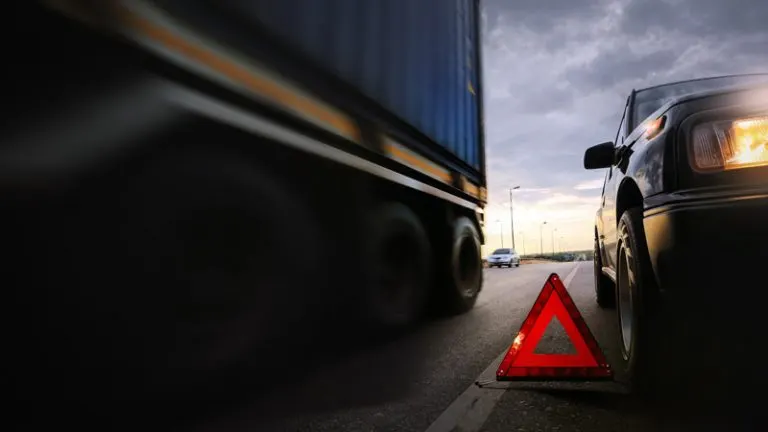
A tow-truck call-out should not be a death trap. Yet that is what happens every time our roadside assistance operators attend a rescue and lose their lives. We address this sensitive subject.
The worst nightmare for someone who works with a roadside assistance tow truck is to have an accident when attending a rescue or incident. Unfortunately, it happens more often than people think: between 2013 and 2014, at least 20 tow-truck operators lost their lives at work, according to the Directorate-General for Traffic (DGT).
The National Road Safety Observatory’s figures on accidents related to assistance activity -following the prior immobilisation of a vehicle due to an accident or breakdown- for 2015 to 2016 are terrible: 50 deaths, 113 people injured and hospitalised and 768 injured but not hospitalised.
20% of deaths on motorways and dual carriageways (303 in 2018 alone) were caused by people being hit, “people who got out of the vehicle or who were working”, Pere Navarro, director of the DGT, has acknowledged.
But the recent chronology of fatal accidents and hits with roadside assistance operators as the main victims goes on and on. It is a very serious issue for the sector:
- October 2021. At the end of that month, a tow-truck operator was seriously injured with multiple injuries in Puerto Lumbreras (Murcia). He was 63 years old.
- February 2021. On the same road, in San Fernando de Henares, a driver lost control of her vehicle in February 2021, mowing down a 43-year-old tow-truck operator who was at that moment working to move a broken-down car. Summa-112 tried unsuccessfully to save his life. The driver of a VTC ride-hailing vehicle managed to jump over the barrier and survive, despite also being hit.
- January 2021. Still in the capital, another fatal accident occurred in January 2021, in which a 40-year-old tow-truck driver died on the M-50, near Alcorcón; he was loading a van when another lorry hit him.
- November 2020. A year ago now, another 36-year-old professional tow-truck driver died after being hit by a lorry while manoeuvring to load a broken-down car onto the tow truck on the M-45 in Madrid.
- June 2020. Paramedics could do nothing for a 41-year-old tow-truck driver who lost his life after being hit -once again- by a lorry. It happened on the A-7 dual carriageway, near Alhama de Murcia.
A long-awaited Royal Decree in the face of a lack of safety

Currently, more than 3,000 owners with 11,000 vehicles used for assistance operations are listed in the Vehicle Register. This is why the sector has fought hard in recent years for legislation such as Royal Decree 159/2021, which regulates Roadside Assistance services and was approved on 16 March this year.
Previously, as we explained in this article, working group GT-42 ‘Roadside Assistance Tow Trucks’ (within the Higher Traffic Council) had been promoting since 2000 a roadside assistance protocol that would dignify the profession, contributing to something as essential as safety.
A protocol that the working group of the Higher Council for Traffic, Road Safety and Sustainable Mobility drew up in 2014, and which would serve as a basis and guide for improving the safety conditions in which assistance operations are carried out. It was published in 2015.
Good practice and a culture of prevention are key to combating these accidents. That is why the Roadside Assistance Companies Network (REAC) has, since its foundation, made every effort in occupational risk prevention training at different levels, with highly qualified and experienced professionals.
Because every life cut short on the road affects us.