
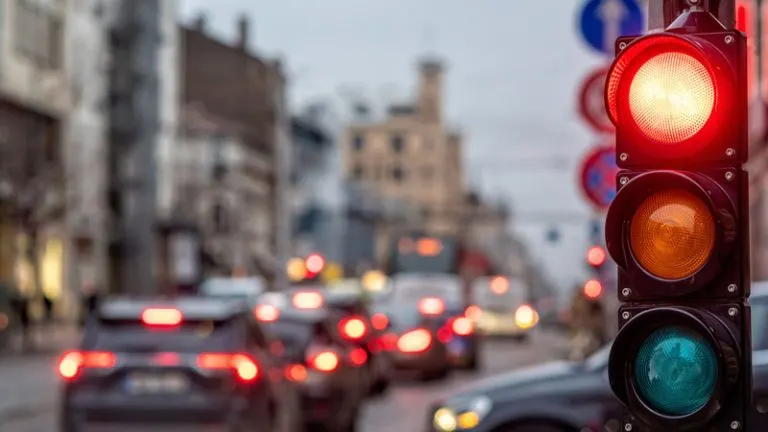
The city without traffic signs is not a mere utopia. It has existed for years in some countries. Although it still has some way to go, since, despite pedestrian priority, there is a lot to change...

This month, 30 Zones came into force in Spain. Many drivers still wonder whether this measure is appropriate; it had previously been introduced in a handful of cities that acted as forerunners. Perhaps these people are unaware of a concept that, in the years to come, will become increasingly important in city traffic: that of "shared space".
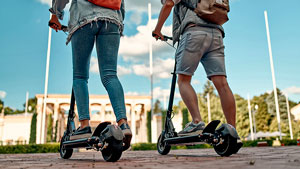
What does this involve? It is very simple. It is based on minimising segregation in urban space, which means removing kerbs and traffic signage in general. This approach assumes that coexistence between pedestrians, drivers and other vulnerable road users (bicycles, motorbikes, scooters or PMVs lately…) will be more respectful. And that speed will be reduced in general.
Not everyone accepts this vision of the city which, obviously, requires time and education; especially in settings where speed limits are so frowned upon. For example, the group representing people with disabilities currently prefers the traditional model (where pedestrians and vehicles are completely separated).
Where does this story come from?
The Dutch traffic engineer Hans Monderman was the one who coined the concept of shared space, applying it in a pilot area: Friesland. There, the municipality of Makkinga (with 1,000 inhabitants) removed signs, traffic lights and pavements under a fixed, strict speed limit (30 km/h). There was not even a parking sign.
There was a funny side to it. Years earlier, the town council had noticed that when the signs were removed during a major redevelopment, the number of accidents had fallen. Monderman recommended that they should not put them back. "The more rules are imposed on us, the more our sense of individual responsibility is weakened", ABC reported in 2012.
Cities free of traffic signs
Germany, Belgium, Denmark and the United Kingdom were countries where, between 2004 and 2008, some provinces followed this trend. In the English county of Wiltshire, which currently has 720,060 inhabitants, the accident rate fell by 35%.
And in the aforementioned Friesland it is said to have fallen by half, 11 years after the signs were removed. As for our country, we can cite the example of Amorebieta, in Biscay, which removed its traffic lights in 2000, drastically reducing accidents (by 80% in 2010).