
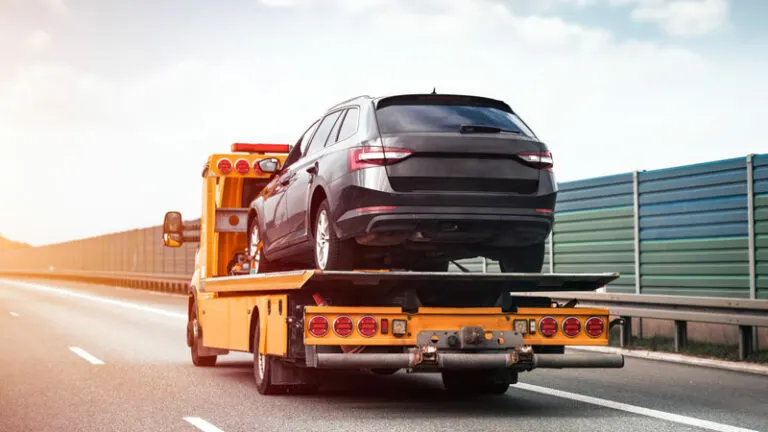
Terms such as “final destination” or “operating position” are some of those included in the Royal Decree approved in 2021, which aims to prevent occupational risks in a sector as tough as few others.
It was in 2015 that the Roadside Assistance Protocol of the Dirección General de Tráfico (DGT) was presented, born of the need for greater safety in carrying out the activity. In 2021 Royal Decree 159/2021 was published, regulating assistance on public roads, also with the prevention of road accidents as one of its main motivations.
Below we break down, in alphabetical order, the terms included in the Royal Decree. A kind of glossary that will help us to be clear about the concepts that describe roadside assistance, and which complements the glossary we published two years ago.
- Final destination: the location where a public road assistance vehicle and its operator deposit a vehicle being assisted, for subsequent repair or the continuation of other work.
- Public road assistance operation: the specific action carried out by a public road assistance vehicle, and its operator, in order to assist and rescue a vehicle immobilised on the road.
- Public road assistance provider: the natural or legal person whose activity consists of providing the public road assistance service, recorded as such in the Vehicle Register and entered in the State Register of Assistance on Public Roads, and which has the appropriate personnel and material resources, in particular public road assistance vehicles, without prejudice to compliance with the conditions established by the sector regulations on land transport.
- Public road assistance operator (called “technician” in the Protocol): the operator in charge of the tasks of assisting, collecting and removing vehicles immobilised on the road.
- Operating position: the location where a vehicle and the assistance operator are on the public road.
- Public road assistance service: the set of operations and actions necessary to assist and rescue a vehicle which, as a result of a breakdown or accident, is no longer able to continue moving under its own power in ordinary circumstances.
- Third party: the company responsible for communicating the dynamic geopositioning of the vehicle and its status during the assistance operation to the authority responsible for the regulation, organisation, management, surveillance and enforcement of traffic, for the purpose of publication on the national access point for traffic and mobility.