
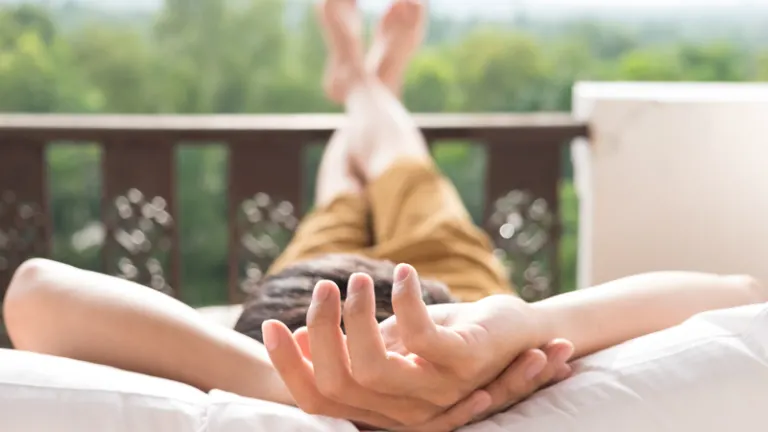
Fear of an empty diary, pre-holiday anxiety… are symptoms of the phobia of free time. Which adds even more stress to already stressful postmodern life. It is worth stopping, pausing. Thinking.
“What do we spend our free time on?” Although it sounds like a lyric by our beloved songwriter José Luis Perales, this question is not as simple as it seems. Do we really rest during holidays or days off? Do we really want to disconnect? Are we obsessively connected to our occupations? How does self-imposed pressure affect the different professional sectors?
In 2017, the psychologist Rafael Santandreu, author of “El arte de no amargarse la vida” (Paidós, 2014), spoke of leisure phobia as a new illness. In an interview with El Periódico he described this condition as “the general fear of having nothing to do”, and spoke of anxiety as a symptom that appeared before holidays, and also at weekends. For some people, the very idea of a leisure plan can become stressful in itself (we will explain this below).
Time for business, time for leisure
 “Leisure phobia has become more acute because of the social trend of being overbusy, because the concepts of efficiency, achievement and fulfilment have been idolised, not happiness,” Santandreu explained in the same interview. He also recommended moderate use of mobile phones, for strictly professional matters, and even a return to landlines for personal contacts.
Is Santandreu asking too much? Probably, bearing in mind that not all professional sectors are the same. Roadside assistance, with demand 24 hours a day/7 days a week/365 days a year, makes this kind of practice difficult. But it is worth remembering that the shift work system should be enough to regulate time and separate it properly; in fact, tools such as the tachograph exist precisely for that purpose, to monitor rest periods.
On the other hand, since people started talking about the phobia of leisure, we have been through a global pandemic (COVID) that turned the organisation of work upside down, introducing concepts such as remote working (teleworking) in certain sectors. And which, at their worst, have blurred even further the boundaries between working hours and personal and family life.
It is obvious that if you do not rest, you do not perform afterwards. And leisure is part of life, however much work may be one of its pillars. Organising free time that is as healthy as possible, entertaining, enjoying hobbies, also devoting time to oneself… should be a goal that makes leisure something pleasant, not something to be feared or a source of anguish.
Reasons to hate free time?
In reality, this situation of leisure phobia can arise from multiple factors. We may find ourselves in a context of domestic conflict (with a partner, children, family…), or fear existential boredom, or give in to work demands, which almost make taking a holiday break forbidden. Perhaps confronting each of these individual realities is the best way to overcome a phobia that has emerged in times when the simple fact of being bored seems a sacrilege. And it is not.
Psychologists talk about standing up to self-imposed pressure if it is harmful. How? By learning to say no, setting limits for others, recognising our achievements, analysing the goals we want to achieve, avoiding guilt when these goals are not achieved. Let us remember: we are human, not infallible machines.
Over-organising leisure can also make it hateful, which is why, for some years now, there have been scholars who speak of a rejection of a somewhat extreme scheduling of free time. “Free time, once scheduled, becomes just another job,” said the Marketing and Logistics expert Selin A. Malkoc, of Washington University, quoted by El Confidencial.