
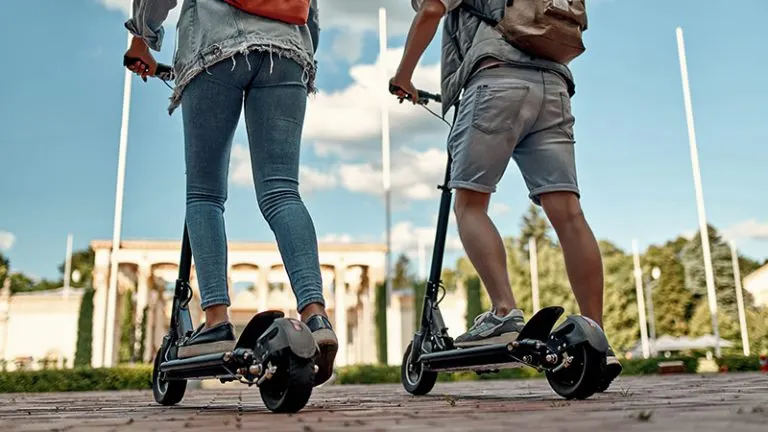
The evolution of the General Traffic Regulations does not only reduce speed in cities: it also affects motorised vehicles that have burst onto the scene in recent times.
One of last year's big news stories as far as mobility is concerned was Royal Decree 970/2020 of 10 November 2020, which amended the General Traffic Regulations and the General Vehicle Regulations, and which will come into force next May. This is a legislative change we announced here in connection with the reduction of speed limits in cities to 30 km/h.
"The mobility and road safety policies developed by local authorities have one main objective: reducing accidents in urban areas", says the text of the Royal Decree, which in this respect talks about new city models. It is a demand from the town councils themselves, which now has national recognition.
In 2017, the number of deaths in Spanish cities rose to 509, 80% of whom belonged to the so-called "vulnerable group", namely: pedestrians, motorcyclists, moped users and cyclists.
Hence the need to set the speed limit at 30 km/h "on streets that have a single lane in each direction". This limit drops to 20 km/h on roads where the carriageway and pavement are on the same level. But it is not only about updating what the speed limit is in the city.

Coexistence between e-scooters and bikes
One of the major new features of this legislation is the definition of so-called Personal Mobility Vehicles (PMVs), scooters and the like. That is, single-seat vehicles with one or more wheels, powered by an electric motor (with speeds ranging from 6 to 25 km/h). However, vehicles for people with reduced mobility (PRM) are not included in this category.
What measures will affect the new PMVs, which have been filling our cities for some time now?
- They must use designated cycle lanes, as well as the carriageway where there is no other option, or streets with a 30 km/h limit and parks. They may not exceed 25 km/h.
- They must comply with basic traffic rules. Their users are subject to the same limits on alcohol consumption (Road Safety Law) and drugs, and as regards the use of mobile phones and devices, which are totally prohibited while riding.
- Interurban roads, as well as roads through towns, motorways, dual carriageways and urban tunnels, are off-limits to them.
Pere Navarro, Director-General of the DGT, explained it as follows: "we have carried out an initial regulation of vehicles that have burst onto the scene in cities and are part of the urban mobility ecosystem, and in the near future we will continue with new regulations covering further aspects such as the age for riding them, the use of helmets or reflective vests, etc."