
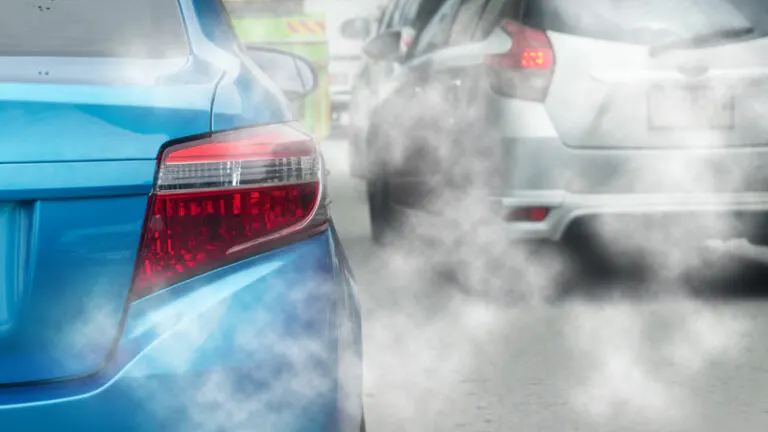
Given the current state of the vehicle fleet and the restrictions in Low Emission Zones, we need to keep an eye, more than ever, on the kind of smoke coming out of the exhaust. Maintenance matters.
In the Spain of 2023, vehicles without an environmental label cannot be driven in the urban centres of certain cities with more than 50,000 inhabitants. Low Emission Zones (LEZs) are a reality based on the Climate Change and Energy Transition Act passed in 2021.
On the other hand, there is the reality of the Spanish vehicle fleet: an average age of 13.5 years, according to a study by the European Automobile Manufacturers' Association (ACEA). More than 60 % of the vehicles on our roads are over ten years old. Given this situation, maintenance should be a priority.
Let's look, for example, at the types of smoke that come out of the exhaust. Do we know what they mean? Because white smoke is not the same as black smoke, or blue smoke. The degree of seriousness they indicate varies. In any case, they should always be taken into account.
Bad smoke: it must be detected
 White or greyish smoke may be due to a problem with the cylinder head gasket (petrol vehicles), or faults in the injection system (diesel vehicles). The density of this smoke will indicate how serious the fault is, and if the temperature rises it can become something very serious.
With black smoke, a vehicle would practically be telling us to book an appointment at the nearest trusted garage. According to experts, there may be faults in the injectors, due to blockage or dirt; or excess petrol in the engine cylinders, which leads to higher fuel consumption.
And blue smoke? In this case, given how rare it is, it can indeed mean a major, intensive-care-level problem for the car. The engine could be burning oil in the combustion chamber, due to wear of engine parts (such as the pistons), or because the oil has the wrong density. A garage or a roadside assistance tow truck will be the vehicle's immediate destinations in this case.