
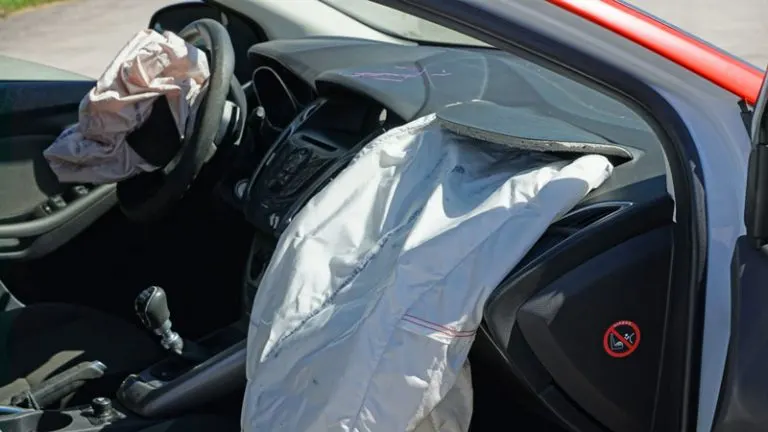
Airbags and seat belts are passive safety devices capable of preventing more serious harm. Thanks to airbags, the risk of death for those involved in an accident falls by 30%.
Radiohead once sang about surviving a crash in a fast German car thanks to an airbag. This song gives us a good excuse to talk a little about the types of airbag that exist today. Cars, motorcycles and bicycles have safety devices that, in their early days, could cause minor injuries to drivers and front passengers. It was Bosch that designed, in 1977, the first airbag to be installed in a vehicle, although the first brand to sell cars with this device was Mercedes, in the early eighties.
First of all, perhaps we should define the concept of passive safety as the set of measures which, when a vehicle is manufactured, are intended to minimise the harm its occupants may suffer in an accident. These are decisions that have to do with the design of seats and headrests, or with the presence of soft or padded elements.

Airbags for cars
The most advanced of all these devices can cover different parts of a vehicle: from the dashboard airbag for front passengers to the bodywork airbag, which can prevent injuries to pedestrians when they are hit, or the airbag for little ones travelling in child seats.

Airbags for motorcycles
It has been shown to help keep the rider’s neck stable, which reduces the risk of death.

Airbags for bicycles
It resembles a padded scarf that we wear around our neck and which inflates as soon as there is an impact or fall.
Compulsory since 2006 – at least the two front airbags in a car – they have diversified over time: side airbags, roof airbags, knee airbags... even in seat belts. They are still not reusable once deployed. They must also be checked when the car is five years old, although older ones will probably expire after 10 years. Newer generations tend to be better prepared to last the entire useful life of the vehicle in which they are installed.