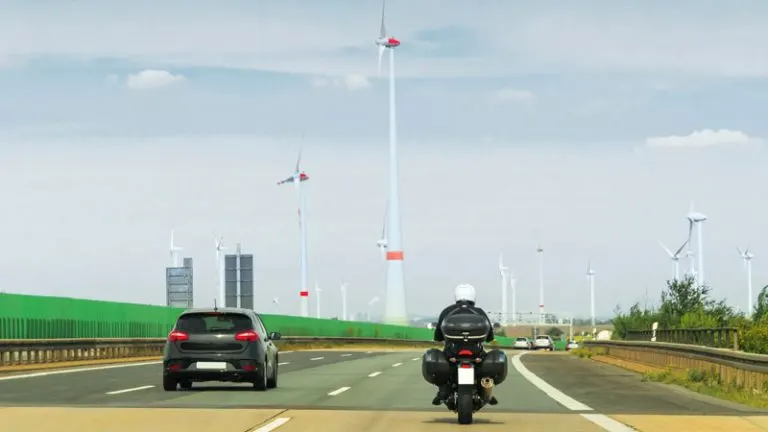
Crosswinds can be a nuisance and a hazard when you are out driving. The P-29 sign warns us of this danger in areas where strong crosswinds are frequent
Wind is like the sun: we do not fully appreciate how important it can be when it comes to driving. Because although it helps if it pushes the vehicle forwards, it more commonly becomes a problem of swerving, instability and, therefore, risk.
The P-29 sign, as well as windsocks or similar devices placed at the roadside, indicate the danger of wind, as well as when it is blowing, its direction and its strength.
Can you drive in strong winds?
Of course you can, but as with other weather phenomena, caution will always be our best friend.
- Reducing speed and driving in a lower gear -the stronger the wind, the lower the gear should be- is essential, especially when the gusts are strong. Because whatever direction it comes from, we will need to try to stabilise the car… and to do that you have to drive slowly and sensibly.
- Another thing we should do is hold the steering wheel firmly, without excessive tension, with both hands; keeping our course by steering into the wind.
- One of the things we should never do is overtake if the wind is strong. Especially if we are overtaking heavy vehicles (the crosswind can put us in a risky situation). It is better to wait for it to die down, or to get through to a calmer area.
- A risk inherent to wind is that it sometimes appears without warning. For example, when coming out of a tunnel. Be careful!
- As far as possible, we must anticipate falling trees, branches, stones… and avoid them, of course.
- Keeping a safe distance from other vehicles is extremely important. Of course, in the wind too. Here we would add lateral distance.
- Tyre pressure is another issue affecting the stability of the vehicle, which is at risk in strong winds. We need to keep an eye on it, and not just because we are told to at the ITV (vehicle inspection).