
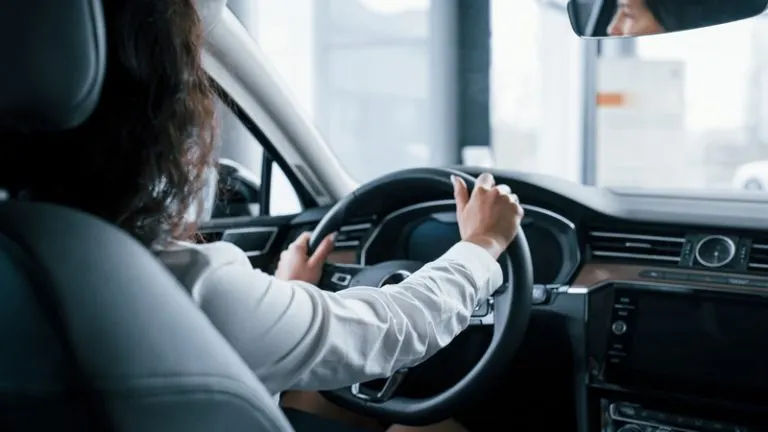
It is best never to relax while driving. Avoiding dangerous autopilot driving can reduce the risk of having an accident. If your job involves long hours on the road, pay attention!
If our daily professional activity involves driving, we clearly develop a series of automatic behaviours as soon as we get into our vehicles. Although these behaviours do not require strict control, as far as attention is concerned we must always be able to count on it, given the role it plays while driving.
Attention performs three main functions in information processing, namely:
- It directs us towards specific stimuli that are relevant.
- It allows us to detect potentially relevant stimuli in the road environment.
- It keeps us alert, ready for possible events.
When we are learning to drive, our attention is at its peak. As novice drivers, we feel unsure of ourselves and avoid distractions at the wheel. It is a different story as time goes by and we become overconfident. A 2008 study by the RACC Foundation, cited by the Directorate-General for Traffic (DGT), concludes that distraction is a risk that drivers do not perceive.
Distractions can be visual, but they can also affect other senses (auditory). There are physical and cognitive distractions. The latter may be particularly dangerous. When our thoughts are not on driving but on something that worries or preoccupies us (for whatever reason), we are hardly aware of it.
Attention strategies
Taxi drivers, professional drivers, bus drivers, hauliers, roadside assistance operators… all these professions involve covering many kilometres in their respective vehicles. Sometimes this means a lot of time. Long journeys. The monotony of the road becomes an uphill struggle. Attention is at risk.
What guidelines can help improve attention? We list a series of recommendations which, if planned before starting the work shift, can be very helpful in keeping our attention at the wheel in check:

- We will start by activating hands-free and programming the GPS, if we are going to need it. Tuning in to the radio station we usually listen to, or putting in a CD or a USB stick if we feel like listening to something specific.
- If we are travelling with someone else, we will avoid any kind of heated conversation or argument.
- When driving, it is vital to concentrate on what we are doing. So just as we avoid bad vibes, we will also steer clear of an overly festive, light-hearted atmosphere.
- Of course, passengers (if there are any) should not comment or give their opinion on the manoeuvres that need to be carried out, unless strictly necessary.