
Safety in roadside assistance is an absolute priority for the tow-truck operators responsible for this work.
One of the crucial aspects of the Roadside Assistance Protocol is the definition of the safety position, which is established with the aim of protecting both the operators themselves and other road users in the event of a breakdown or accident. Below, we explain this important protective measure in detail.
The safety position is based on a series of elements and guidelines designed to maximise the visibility and understanding of the hazardous situation for all road users. The key aspects that define this position include:
- Appropriate distance: The assistance vehicle must be positioned at least 10 metres in front of the broken-down vehicle. This distance provides a sufficient safety margin to prevent collisions.
- Parallel to the flow of traffic: The assistance vehicle must be positioned so that it faces as parallel as possible to the flow of traffic, making the situation easier for other drivers to see and understand.
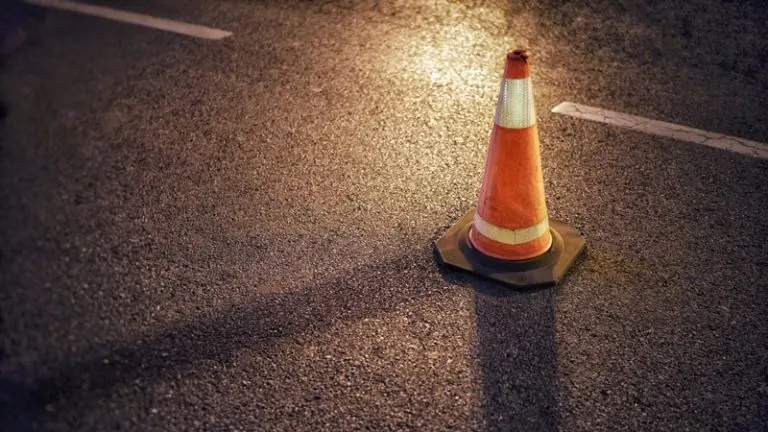
- Appropriate signage: "Other dangers" warning signs and mandatory direction signs must be used, as well as temporary signage such as cones and rotating beacons, especially in low-visibility conditions.
It is important to stress that, although these are the general guidelines for the safety position, there are circumstances in which the operator may choose not to follow this position. Examples include the decision to remove the broken-down vehicle, the impossibility of repairing it within a short time, or the need to manoeuvre the assistance vehicle differently due to the nature of the breakdown.
In such cases, it is essential to reinforce the light signals and beacon markings as much as possible to guarantee optimum visibility and alert other road users. In addition, the technician must bear certain aspects in mind, such as avoiding stopping in a lane carrying the flow of traffic, following the instructions of the officers of the Fuerza de Vigilancia de Tráfico (FVT), and assessing whether the signage at the scene could be improved by placing cones or taking other measures.
The areas of highest risk are:
a) Along the side of the vehicles closest to the flow of traffic.
b) The space between the immobilised vehicle and the assistance vehicle, the “sandwich zone”.
In conclusion, the safety position is a fundamental measure to guarantee safety in roadside assistance. By following the established guidelines and adapting them to the specific circumstances of each situation, operators can make a significant contribution to preventing accidents and protecting all road users.