
A lack of resources and the demand for “record times” in responding to roadside assistance users are putting pressure on companies that emerged as essential during the pandemic.
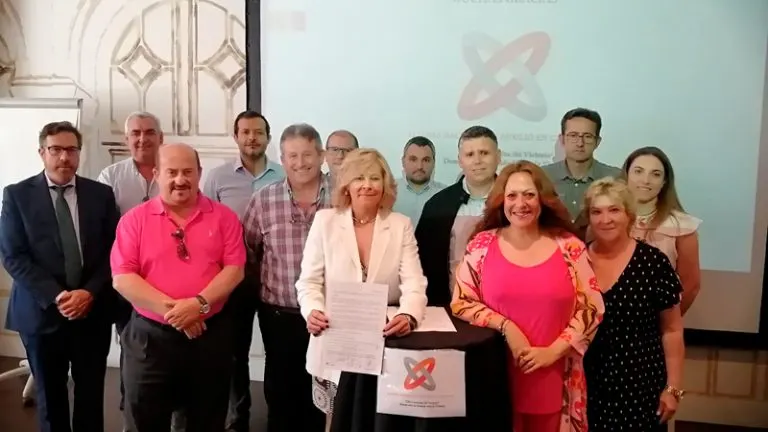
“Ubi concordia, ibi victoria” (“Where there is unity, there is victory”) is the motto that the National Roadside Assistance Alliance raised at its founding event, which took place on 19 May in Madrid. The main message from this platform concerns the difficulties in providing roadside services due to the economic crisis, the shortage of resources and the demands for urgency in incidents that are not serious, such as lost keys, flat batteries in vehicles parked in garages, etc.
Insurers, platforms and travel assistance companies offer the end customer an express assistance service that most companies cannot provide, given the limited resources available. The drive to offer ever shorter response times to their users -given the competitiveness of the sector- is doing outrageous harm to the roadside assistance sector, which also condemns the impossibility of bearing the “compensation payments” for delays.
“The organisation of recovery and assistance services is slipping out of the control of roadside assistance companies, so we cannot guarantee provision in certain cases… something that did not happen until now,” said the Alliance spokesperson, Xavier Martí, on the day the organisation was presented.
The Alliance is made up of the following regional and national associations and business organisations: ABEAC (Balearic Islands), ABEAC (Basque Country), ASCA (Catalonia), AMEAC (Madrid), ANESAV (National), ASCALEAC, (Castile and León), ASEDA (Andalusia), ASEGA (Galicia), ASEXTEAC (Extremadura), GRUPO CARTER (National), CEPAS (National), FEGRUAL (National Federation) AGREGA-GRUAS and REAC (National Grouping).
A crucial sector for Road Safety
More than 10,000 tow trucks operate on Spanish roads, within a professional sector that brings together 2,000 companies and 11,000 workers. More than 8 million roadside assistance and rescue services are carried out every year in Spain, contributing to maintaining Road Safety. These are companies -mostly SMEs- that provide a service to society as a whole through motoring clubs, platforms and travel assistance companies that act as intermediaries in the roadside assistance contracts segment.

The price of the services provided by roadside assistance companies often barely covers their own costs. The deterioration in quality and immediacy are the consequences of a drift that forces resources to be withdrawn from truly serious incidents in order to carry out services for which insurers have set exaggerated time limits, or compensation if these times are not met.
In this respect, the Alliance has got off to a strong start. The Alliance’s legal team is analysing the abusive situations to which intermediary platforms and travel assistance companies subject roadside assistance companies. Martí, the organisation’s spokesperson, announced at the May event -where a Manifesto was read out- that the conclusions of this investigation will be brought to the attention of the competent authorities.
The Alliance’s primary objectives

In this respect, the main purpose of this National Roadside Assistance Alliance would be to halt the severe worsening of service conditions in the sector, in an increasingly vulnerable situation. Response times for accidents and breakdowns must be in line with the seriousness of the situations; it is the only way to keep providing services 24 hours a day, 365 days a year in a realistic and dignified way.
The rates imposed by intermediaries must be appropriate to the costs borne by roadside assistance companies. It is also essential for the workforce to be as qualified as possible, since this is an activity that affects Road Safety.
During the event to create this Alliance of sector organisations, the gauntlet was thrown down to the Directorate-General for Traffic (DGT). In the Alliance’s opinion, the DGT must act as arbiter in creating a regulatory framework that resolves these conflicts, beginning by completing the regulation of the sector that it currently has in progress. Unfair competition between companies only leads to the deterioration of tow-truck services, as legal requirements for such services are not met.