
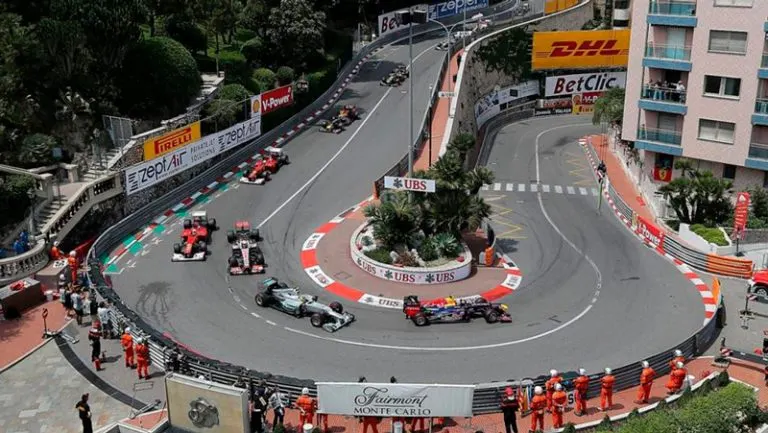
Taking the Loews hairpin on the Monaco Grand Prix circuit should hold no secrets for us if we are drivers with many miles behind us. There is no need to drive a car professionally. It is enough to drive well.
How do you drive round tight bends? Without a doubt, knowing how to take a bend properly distinguishes a careful, experienced driver from an overconfident novice. People who set out to cross mountain passes or difficult urban routes, full of hairpins (which turn approximately 180º and are especially tight), with a cool head and knowing what they have to do, are clear about how to turn the car without any danger.
Knowing a little in advance about the road we are going to drive on—either because it is part of the route, or simply because we fancy taking it—never hurts. And bear in mind, especially if we are motorcyclists or travellers, that we are not alone on the road: there are people who use that road to get from A to B, who are not touring, travelling or out for a ride in their vehicle or on their motorcycle.
Things we need to know to come through a road full of bends successfully:
- If the bend turns to the right, we will have to keep to the right, always within the lane; and if the bend turns to the left, we will also have to keep to the right, carefully, to enjoy greater visibility.

The condition of the road matters, of course, since if the surface is deteriorated, we must take great care (and also with the tyres, if they are underinflated). - For whatever reason, we may need to brake: better to do so before entering the bend, gently.
- The tighter the bend, the greater the need for anticipation and traction.
- The steering wheel should be held gently, too, while maintaining a constant speed; when coming out of the bend, you need to straighten up and accelerate a little to stabilise the vehicle.
- Watching the signs is key, since it is the signs that will tell us the mandatory speed we must adapt to.
- The condition of the road matters, of course, since if the surface is deteriorated, we must take great care (and also with the tyres, if they are underinflated).
- The weather will influence how we drive on these roads, so we must be even more cautious if it is bad. If rain, ice and snow make life difficult in general... imagine on a winding road!
Featured image source: TopGear