
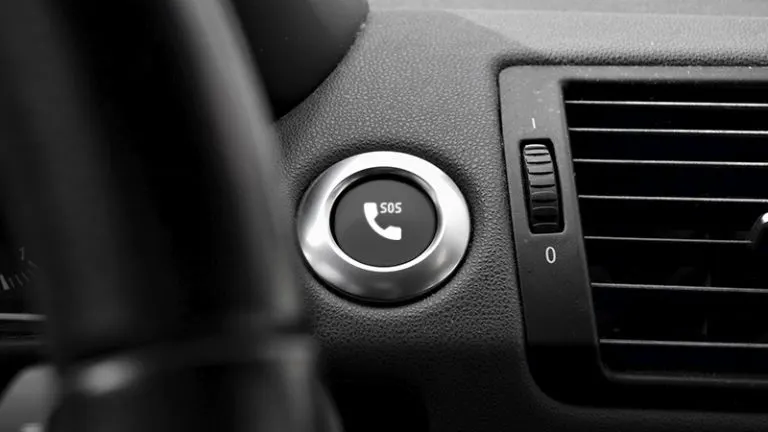
It will soon be a year since it became compulsory to install the eCall system in new vehicles manufactured in the European Union. But do we know what it is?
It was on 1 April last year that the eCall system – short for "emergency call", whose first implementation was studied in 2009 – came into force throughout Europe. It was, and is, a technology designed to contact each country's emergency services from a vehicle involved in an accident (in Spain, the 112 number). According to estimates, a system like this, once introduced across the entire vehicle fleet, could save up to 2,500 lives a year in Europe.
When we talk about "installing eCall", we are referring to newly type-approved cars and vans, which must now be fitted with this automatic emergency call system. As for motorcycles, tests are still being carried out, and the idea of placing sensors in the rider's helmet or clothing so that these calls can be triggered is being considered.
How does eCall work?

When the airbags deploy during an accident, the system is activated and a voice connection is established with the 112 centre, so that it becomes a top-priority alert; the driver and the other occupants of the vehicle can also press the SOS button fitted in vehicles with eCall manually. The rescue services thus receive extremely valuable information immediately: type of vehicle, registration number, make, model, fuel, vehicle occupants, and so on. Crucial data for immediate roadside assistance.
However, the system is not yet widespread, so for those who drive older vehicles and need the emergency services, calling 112 – a free number that always works, 24 hours a day, 365 days a year – is, for now, the alternative to eCall. A system which, moreover, should be welcomed as one of the major commitments to road safety, in which roadside assistance vehicles are so closely involved.
Cutting response time by almost half (by 50% in rural areas and 60% in urban areas) to prevent immediate deaths is a huge challenge. But an achievable one. In fact, between 2005 and 2015, the number of deaths on the Union's roads fell by as much as 43%.