
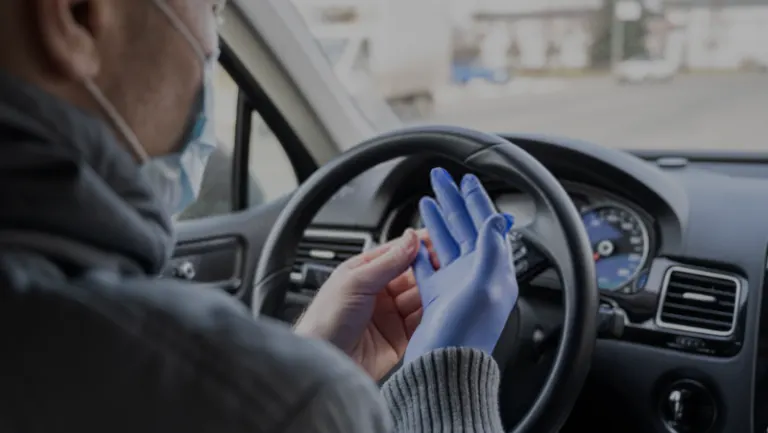
The pandemic is testing everyone’s nerves. Including those who have to spend their working day behind the wheel. Stress needs to be kept under control, as it can lead to an anxiety attack.
In these days of lockdown, driving time is very limited. Hauliers, security forces, roadside assistance tow truck operators, public transport drivers... few people are behind the wheel during their working day. Most of the population, shut up at home, is only allowed to make individual journeys in certain cases.
As the images from the Dirección General de Tráfico (DGT) campaign for Easter show, Spain’s roads are empty. So much so that the message this year has been very different from previous ones: the DGT has thanked the confined public for their sense of responsibility.
Traffic has fallen by 91 %, both on long journeys and on routes in and out of the big cities. However, those who have to drive are under a different kind of pressure these days.
The DGT points out that stress is already a typical problem in extremely fast-paced societies like ours. This moment is so different from anything experienced before that uncertainty is a heavy burden on daily work, which in itself generates strong pressures for many individuals.
When reality pushes us to the limit...
Stress needs to be kept under control. Above all because it is bound to appear. As the Fundación para la Seguridad Vial (FESVIAL) explains in this article, "stress is a normal psychological process", and it arises when "we perceive or are faced with situations of demand and do not know how to respond to them clearly and appropriately". When we feel we are at our limit, anxiety translates into shortness of breath and palpitations.

At the time of writing, Covid-19 infection has caused 15,238 deaths in Spain alone (88,083 worldwide). Fear of infection is understandable, even though 52,165 people in our country have also recovered from the disease. In fact, both lockdown and social distancing measures are designed to avoid infection: rather than fearing the virus, we need to respect it. Look after ourselves in order to look after others.
Driving with anxiety: tips
However, we must think of those who travel to work every day (if they are healthcare workers, for example), or who spend their working day in a vehicle, such as the men and women of the Military Emergencies Unit (UME), or Guardia Civil officers. Or our tow truck drivers. Although, as FESVIAL states, "a certain level of stress is necessary to come through many situations successfully", it is extremely important to know how to manage it in order to drive safely.
In this respect, the foundation’s recommendations are mainly about self-care:
- Sleep hygiene, that is, sleeping the hours our body needs
- Avoid alcohol and medicines, and of course self-medication
- Maintain a healthy diet, drink plenty of water
- Cut down on tobacco, coffee and stimulants
- Avoid negative thoughts, set priorities
- Keep busy and relax with hobbies (culture, sport, gardening, board games...)
- Drive with music: don’t overload yourself with information about the pandemic
- Stop the vehicle in a safe place if you suffer an anxiety or panic attack, and ask colleagues or loved ones for help immediately