
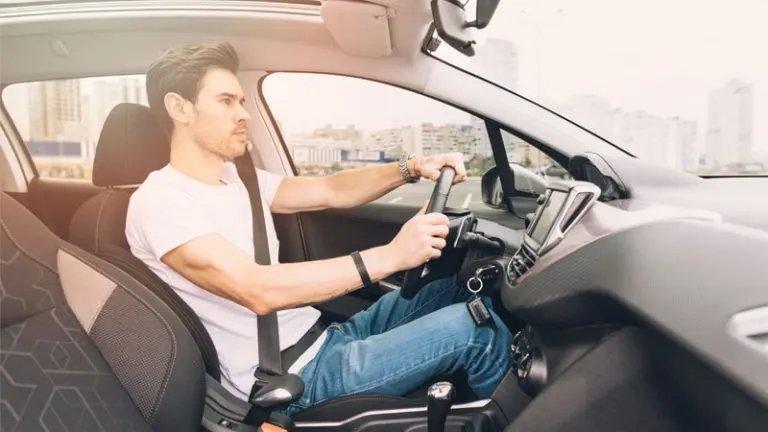
In winter or in summer, the clothes we wear as motorists matter. Even if sometimes we are not yet aware of it.
The Parisian writer and journalist Louis Baudry de Saunier, a science writer specialising in the world of the motor car, called for driver comfort in his classic 1930 work “The art of driving a motor car”. And for appropriate clothing too. He went so far as to forbid badly knotted or loosely fastened scarves: “no loose garment that might whip the driver’s face, for this trifle [...] could cost you your life”. Footwear, he said, should not be flimsy, “for it is subjected to very hard work by the contractions of the foot when operating the pedals…”. Monsieur Baudry was right to make these recommendations: dressing properly when you are at the wheel is no trivial matter.
In 2013, a study published by the Comisariado Europeo del Automóvil made it clear that, during the summer, a significant proportion of drivers in our country were not exactly wearing the most suitable clothes. One of the most striking findings of the survey was this: while 96% of motorists believed they were properly dressed, one in four admitted to having driven in swimwear; on the other hand, they seemed to be better informed about which footwear to wear… but not so much about clothing.
It is not only in summer that we should dress properly when we get into the car, the van, or any type of vehicle. When the cold arrives, coats and accessories such as scarves, hats and gloves are off limits. As for footwear, you should avoid heels or platform shoes, which make it extremely difficult to use the pedals; the same goes for rigid shoes, as they reduce sensitivity when pressing the pedal. Flip-flops and flimsy footwear that make manoeuvres such as emergency braking more difficult should be avoided.
Comfort and flexibility

Roadside assistance can become more complicated if the people travelling in a vehicle – driver and passengers – are dressed inappropriately. A coat is known to restrict the wearer’s mobility, which is why, even when temperatures are low and journeys long, it is always better to cover little ones with a blanket than to leave them in their anoraks, puffer jackets, parkas, duffel coats and so on. Remember that the DGT rules set fines of between 80 and 200 euros for people who, when driving, do not maintain freedom of movement and control at the wheel. Driving barefoot is prohibited.
Then there is workwear for regular drivers. Comfort and flexibility are the watchwords here, so clothing should be as loose as possible without being excessively baggy. As the saying goes, virtue lies in the middle ground. Another thing to avoid is the seat belt touching our skin: in the event of an accident, this can be very harmful (we can suffer chafing and burns).