
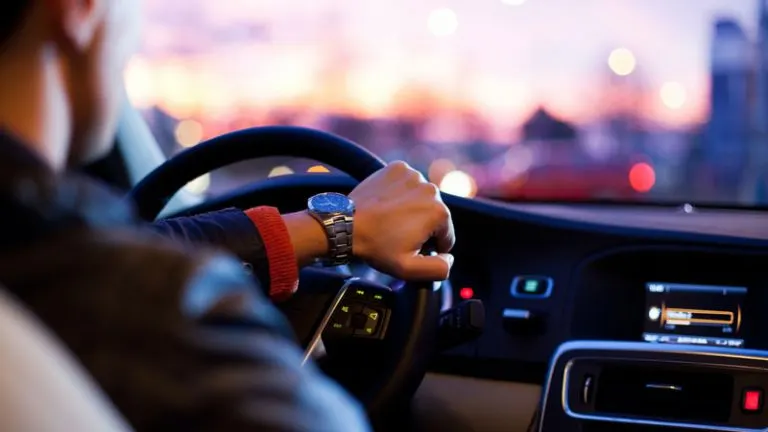
Here's a fact: drivers who let themselves be carried away by frustration in traffic jams are 30% more likely to have a rear-end collision or accident. Do emotions matter when driving? Enormously!
The connection between driving and emotion is reflected, and how, in advertising messages. Just look at famous slogans such as SEAT's ("Autoemoción") or Peugeot's ("Motion & e-Motion"), as well as campaigns like Volkswagen's, which in 2018 appealed precisely to how exciting it still was to drive a Volkswagen Golf, the brand's iconic model.
In this respect, marketing does its job, but day to day, when we drive, we must be aware that, however exciting driving may be (and it is), emotions have to be kept in check. Whether we are in a good mood or angry, or feeling melancholic or euphoric, we must not forget that driving involves great responsibility.
Making decisions when carrying out a manoeuvre (overtaking, parking, joining the motorway) requires paying attention at the wheel: it has to be rational, not emotional. As specialists in driving psychology say: the more intelligent the driving, the greater the safety. Rationality is equated with intelligence, although emotional intelligence is equally key to managing emotions. As we will see.
Negative emotions vs positive emotions
Broadly speaking, emotions can be positive, negative or neutral, primary (in response to a stimulus) or secondary (caused by social and moral norms). Anger, fear, happiness, love, surprise, disgust, sadness... all have physiological correlates and are linked to our experiences and the context in which we live. We are made of emotions.
Fear, for example, need not have a negative impact if it is a matter of driving cautiously and responsibly. On the other hand, sadness and negativity are a breeding ground for unnecessary tension. And avoidable tension.

Authors such as Daniel Goleman, in his book "Emotional Intelligence" (Kairos, 1997), make an interesting contribution to psychology as applied to driving. One of the risks when driving is being swept along by negative emotions. Goleman contrasts two very different attitudes:
- If someone gets too close to our vehicle, to the point of putting us in danger, it will generally provoke a feeling of anger, even of revenge. Fights on the road, or in town, are sadly notorious (and they even end in accidents or injuries between drivers).
- In the same situation, making an effort to think that perhaps the other driver has not seen us, or is in an urgent situation, can quickly reduce the intensity of our anger and avoid a fit of rage that does nobody any good.
Techniques for controlling emotions
Self-awareness and self-control go hand in hand when it comes to managing our emotions intelligently. Techniques for controlling emotions include physiological as well as cognitive ones. Let's take fear as an example:
- We can turn to physiological techniques such as controlling our breathing, progressive muscle relaxation, mindful meditation (or mindfulness) or physical exercise, even if moderate.
- As for cognitive techniques, there is distraction (listening to music, if we are on the road), thought stopping or mental rehearsal (visualising a feared situation in order to experience it, mentally, in a normal or successful way).