
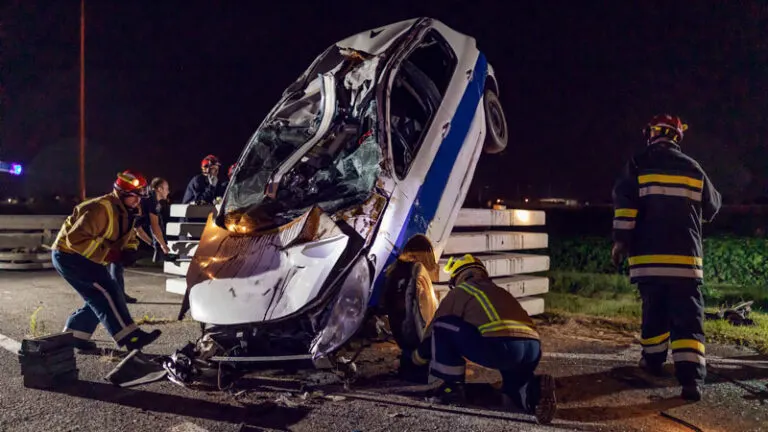
The time between an accident and the victims arriving at hospital is known as the “golden hour”, and it should not exceed 60 minutes. The rescue sheet is essential for this.
It is possible that, despite having been driving for years and years, someone mentions the “rescue sheet” and we think, “what is that?”. It is a very important document that we should carry, preferably printed in colour, in the driver's sun visor, and which contains a series of technical data relating to the vehicle's safety. In the event of an accident, emergency personnel (mainly firefighters) will have, thanks to this document, invaluable and precise information to extract victims trapped in a vehicle more quickly. Within the so-called “golden hour”.
They have several tasks ahead of them: from removing the roof to disconnecting the battery. And of course, for that they need certain data from the manufacturer, which is the one that indicates exactly where they should cut. The fact that vehicles are increasingly electrified makes this operation progressively more complex.
The standardised European rescue sheet
 If we visit the Rescue Sheet website we can download the rescue sheet for a considerable number of makes, which show the location of, for example, the high-voltage wiring. It is in fact a model standardised throughout Europe, in A4 size. It sets out, in summary form, where components such as the airbag are located (something crucial, since it is connected to small gas cylinders), as well as the aforementioned cables, batteries and so on.
After a crash, some vehicles can become a tangled mass of metal, making it difficult to rescue people who may be trapped inside. Within the golden hour, emergency doctors still say that you have to move as fast as possible. For this, the rescue sheet is worth its weight in gold.