
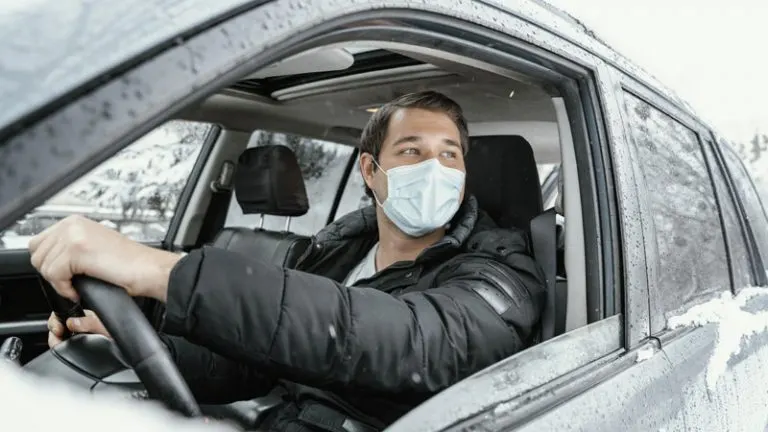
Faced with a beautiful snowy landscape, it is best not to let your guard down. Hard, packed snow is as dangerous as ice. But soft, freshly fallen snow is just as dangerous.
The cold is setting in and, with it, the difficulties of driving caused by low temperatures. People used to snowfall are undoubtedly prepared for the rigours of snow. However, if we live in areas with milder climates, we will need to know how cold and snow affect the roads we travel on. All the more so if we are on our way to rescue another vehicle in trouble, as is the case for roadside assistance operators.

First of all, driving in snow presents two difficulties that must be taken seriously:
- Reduced grip between tyres and road surface.
- Loss of visibility when we are in the middle of a snowfall.
But snow, whether hard or soft and freshly fallen, brings quite a few dangers. Freshly fallen snow, in fact, has the same effect as the first drops of rain when they mix with the road surface and dirt. Heavy snowfall can hide road markings and signs, so we must pay special attention.
If it is snowing, we should switch on dipped headlights or front fog lights, turn on the windscreen wipers, and also make sure the screenwash contains antifreeze.
On a snowy surface, the sun can dazzle us, as its light is strongly reflected off the white blanket. It is advisable to wear sunglasses in these conditions.
Tips to follow no matter what: for our safety
- It is important to keep the wheels straight when pulling away, and to do so in second gear, releasing the clutch gently and accelerating steadily but smoothly.
- In this context, good tyre maintenance -correct pressure, tread- will be essential before driving on snow.
- Drive responsibly, with caution and of course without speeding, keeping an even greater safe distance from other vehicles.
- Speaking of other vehicles: follow their tyre tracks.
- Make sure snow does not build up in the wheel arches, as this could affect cornering and other manoeuvres.
- Fit snow chains on the drive wheels.
- Brake sensibly, avoiding braking on bends (the wheels could lock). It is dangerous!
- Use the highest gear possible, driving unhurriedly and avoiding abrupt gear changes. When going downhill, drive slowly and in a lower gear than usual.
