
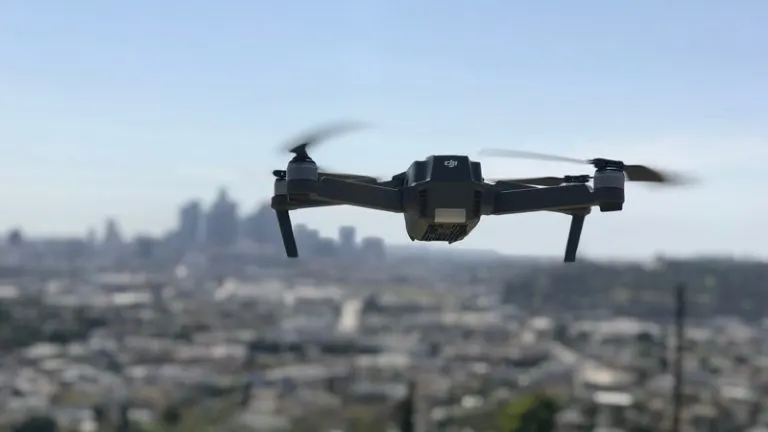
It was in 2018 that drones arrived at the DGT to provide surveillance on a trial basis. The following year they were fully incorporated as sentinels and offence detectors. This year there are 28 more devices.
Speeding. Improper overtaking. Reckless driving. U-turns or changes of direction in prohibited places. Distractions at the wheel. Loose animals in the vehicle. Driving with a mobile phone in hand. Until now, gyro-stabilised cameras checked all these negligent behaviours at the wheel. And they did so from the helicopters of the Directorate-General for Traffic (DGT).
Then came the drones. If they began testing in May 2018, getting down to work in 2019 and 2020, it is fair to say that 2021 will be the year they are confirmed as sentinels of the road. Built in Spain with Spanish technology, the traffic drones place our country as a pioneer in the use of these devices in the field of Road Safety.
Features of the drone

These camera drones will be used throughout the country (except in Catalonia and the Basque Country), monitoring the stretches where, statistically, the largest number of accidents occur. Also those areas used by the largest number of vulnerable users (cyclists, motorcyclists and pedestrians).
The DGT has trained almost a hundred people, both in piloting drones and in operating the cameras built into these devices; they may be DGT staff or officers of the Guardia Civil Traffic Group. It has also obtained accreditation from the State Aviation Safety Agency.
In addition, each DGT helicopter patrol, with bases in A Coruña, Zaragoza, Valladolid, Seville, Málaga and Valencia, currently has two drones to work in its area of operation.
Madrid, for its part, has 15 aircraft covering its own area, while also supporting the other provinces. Cantabria, Asturias and Extremadura have two drones each; the Balearic Islands and the Canary Islands have three per archipelago.
Professional drones

The devices correspond to four models. The Thyra V019 is the heaviest, with the greatest range (10 km), and has a flight time of 40 minutes, like the M200 model, which is somewhat lighter but also features optical and digital zoom. The other two models, somewhat smaller, are the Phantom 4 and the ThyraV105, with a shorter flight time (20 minutes) and range (3 km).
They can reach speeds of 80 km/h, flying at a height of 120 metres. In addition, they can withstand temperatures ranging from 20 to 45 °C. Some of these devices can be said to be something of veterans, having clocked up 500 flight hours. They have monitored more than 55,000 vehicles, detecting more than 600 offences.
These include using a mobile phone at the wheel (12.5%), incorrect use of seat belts and child restraint systems (15.9%), and overtaking cyclists without keeping a safe distance (4%).
Image source: DGT.