
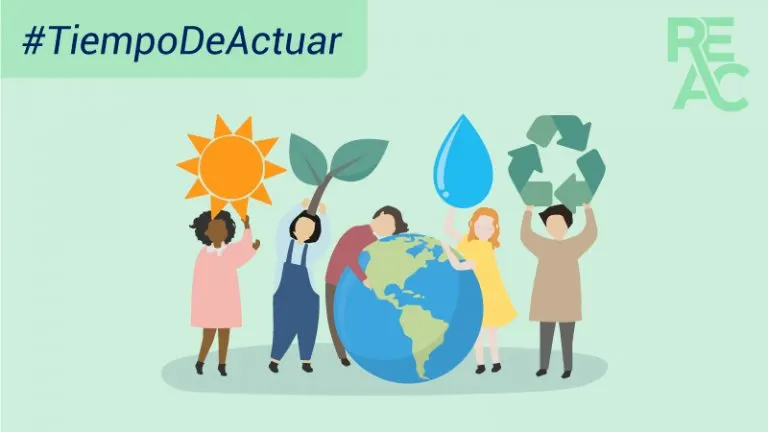
The World Climate Summit has begun. The planet is looking to Madrid, where its future will be decided until 13 December. Global warming concerns us all.
This week saw the start in Madrid of the COP25 World Climate Summit, which, from 2 to 13 December, will bring together more than 25,000 representatives from 200 countries to reach agreements to combat the effects of climate change. This conference, organised in its twenty-fifth edition by Chile, was born out of the historic Earth Summit in Rio de Janeiro in 1992. The so-called Conference of the Parties – hence the acronym COP – is the supreme body of the United Nations Framework Convention on Climate Change (UNFCCC), and met for the first time in Berlin, in 1995.
The anthropogenic origin of climate change was established in a UN document presented in 2013 during COP19 in Warsaw. That report concluded that there was 95% certainty that the cause of global warming lay in human activity since the 1950s. #TiempoDeActuar is the hashtag chosen for this edition of the Climate Summit in the Spanish capital.
Impacts of Climate Change
A European Commission study entitled “Impacts of Climate Change: a focus on road and rail transport infrastructures” was already discussing, in 2012, the need to plan design and maintenance strategies for infrastructure because of the deterioration it could suffer as a result of extreme weather events – one of the characteristics of climate change – as Néstor Cenizo points out in this interesting article, which highlights how the cost of damaged infrastructure could rise at regional level in Europe. This affects road mobility, private vehicle traffic and, of course, roadside assistance professionals.

How does climate change affect our sector? When a roadside assistance company renews its fleet, the commitment to electric vehicles or hybrid tow trucks is linked to assisting electric vehicles immobilised because they have run out of power. That is where mobile charging points come in: vans equipped with generators to give range to electric vehicles that have broken down on the road. Electric vehicles make it possible, for example, to reduce gas emissions. Let us remember that GHGs (Greenhouse Gases) are the cause of global warming.
In April this year the European Parliament approved regulations requiring manufacturers of heavy-duty vehicles to reduce their carbon dioxide (CO2) emissions by 30% by 2030 compared with 2019. Heavy vehicles are responsible for 22% of emissions, despite accounting for 5% of the vehicles on the road.
But there are also small gestures that matter, since they involve reducing speed, driving less, checking tyre pressure or driving efficiently. The mandate of COP21, where the historic Paris Agreement was signed (on 22 April 2016, by 175 world leaders), called for a strong global and multilateral response to halt global warming. By 2100, according to this agreement, the planet’s average temperature should have risen by 2 °C at most, with every effort made to limit this rise to 1.5 °C. A great deal is at stake.