
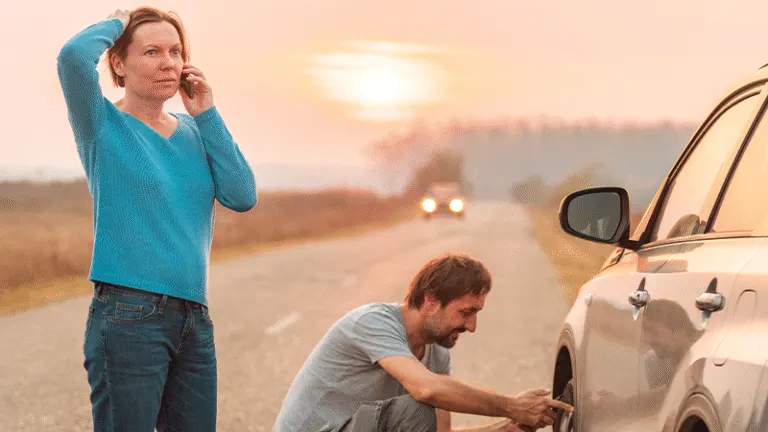
Picture the scene: you are on your way and suddenly your car stops. A breakdown. Immobilised. The first thing you do is call roadside assistance. But what do you do while you wait for help to arrive? The way you behave in those minutes or hours can make a big difference to your safety and that of the professionals coming to your rescue.
At REAC, the Network of Roadside Assistance Companies, we see situations every day that could be less dangerous if drivers knew the basic safety guidelines. Knowing the common mistakes and how to avoid them is crucial.
Mistake #1: Not signalling your vehicle and your position properly
This is perhaps the most serious mistake. A car stopped on the hard shoulder or in a lane without proper signalling is an invisible and extremely dangerous obstacle, especially at night or in poor visibility.
How to avoid it:
- Switch on your hazard warning lights immediately. They are the first signal to other drivers.
- Put on your reflective vest. It is compulsory to carry one in the car and to put it on before getting out of the vehicle. It makes you visible to others.
- Place the advance warning triangles. In Spain, you must place one 50 metres from the vehicle and another 50 metres behind, making sure they are visible from at least 100 metres away. On a motorway or dual carriageway, this is only compulsory if you can do so safely. Remember that the new regulations allow the use of the V-16 warning light, which is even safer and more visible, and will soon be the only option.
Mistake #2: Staying inside the vehicle, especially on the traffic side
Although it may seem the most comfortable or safest option, staying inside the car, particularly on the side closest to the traffic, exposes you to unnecessary risk in the event of a rear-end impact.
How to avoid it:
- Get out of the vehicle on the side away from the traffic (if possible and safe).
- Move to a safe place away from the carriageway. Behind the crash barrier (safety barrier) is the ideal place if there is one. If not, keep as far away from the road as possible.
Mistake #3: Trying to repair the breakdown without safety measures or know-how
Unless you are an experienced mechanic and are in a safe place (for example, a service area), trying to repair the vehicle on the hard shoulder is reckless and can have serious consequences.
How to avoid it:
- Trust the professionals. That is what roadside assistance is for. Technicians have the training, tools and experience to handle the situation safely.
- Stay away from the broken-down vehicle while you wait. If the car is in a dangerous place, move away from it.
Mistake #4: Getting distracted by your mobile phone or not paying attention to your surroundings
Once you have signalled and got to safety, it is easy to give in to the temptation to "kill time" on your phone. However, you must stay alert to your surroundings and the traffic.
How to avoid it:
- Stay calm and alert. Being alert will allow you to react if the situation changes or if a vehicle approaches dangerously.
- Communicate clearly with your assistance service. Describe your location as precisely as possible, along with any relevant details about the breakdown.
Safety is Our Shared Priority
At REAC, our operators are highly trained (as our Level 1, 2 and 3 courses show) to manage roadside incidents as safely as possible. But their work becomes exponentially safer when the drivers requesting help also take proactive measures.
By following these simple tips, you not only protect yourself and your passengers, but also contribute to the safety of our assistance teams and other road users. Your prevention is our peace of mind.