
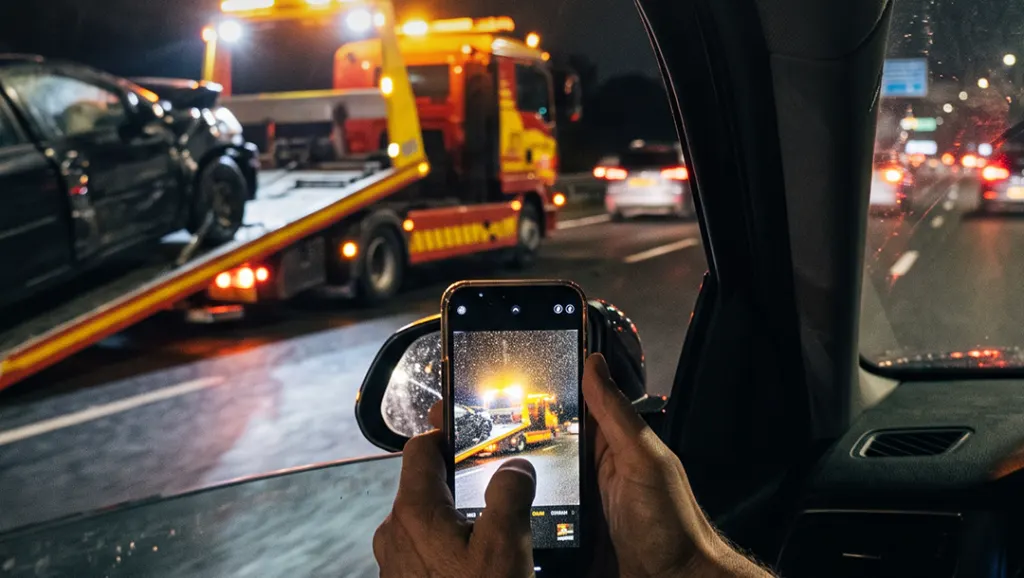
When we are driving on the dual carriageway and see the flashing of amber beacons in the distance, the unconscious reaction of many drivers is to ease off the accelerator, crane their necks or, in the worst case, take out their mobile phone to record the scene. This practice, technically known as the "rubbernecking effect", is not simply a show of curiosity; it is one of the most inconsiderate and dangerous forms of recklessness on the road network in summer.
The search for a photo or a morbid detail to share on arrival at the destination completely disrupts the flow of traffic and creates a situation of critical and immediate risk.
The knock-on impact of a distraction next to the emergency services
Every time a motorist decides to brake next to an assistance or accident area, they cause three extremely damaging effects on road safety:
- Sudden braking and rear-end collisions: Drastically reducing speed in a fast lane takes the drivers behind completely by surprise. This triggers sudden braking and new secondary accidents that bring the road to a standstill.
- Loss of spatial awareness: By taking their eyes off the carriageway to look at the damaged car, drivers lose track of the space occupied by their own vehicle. This leads them to pass just centimetres from the roadside assistance operator, who is working completely unprotected at road level.
- Gridlock on evacuation routes: The rubbernecking effect is directly responsible for the kilometres-long tailbacks that form in the opposite direction to the incident. These unnecessary hold-ups slow down the arrival of ambulances, fire services and other assistance units.
💡 The challenges of new mobility: This risk of a secondary impact caused by distraction becomes even more critical when the immobilised vehicle has high-voltage components. We recommend reading our technical analysis on The challenges of new mobility: Critical protocols for assisting electric vehicles in summer to understand how we manage these highly complex situations in congested environments.
How to act correctly when you come across roadside assistance
The next time you spot emergency lights in operation on the hard shoulder, show real respect for the professionals who put their lives on the line by following this basic protocol:
- Don't brake to look or take out your phone: Keep a constant speed and your attention fixed ahead. The road is not a live show.
- Signal and move over: If traffic conditions allow, move into the left-hand lane to leave a wide lateral safety space from the tow truck and the operators.
- Keep traffic flowing: Remember that clearing the area as soon as possible helps the road return to normal and protects the lives of those working on the ground.
Would you like to know more?
If you would like to know how this integration benefits your company or how to become part of our network, visit our Private Area or get in touch with us at: