
Breaking down on an open stretch of road is a risky situation, but being stranded inside a tunnel amplifies the danger factors due to the lack of lateral space, acoustic resonance and limited visibility. Knowing the exact sequence of actions is vital to protect the occupants and speed up the arrival of assistance.
The operational complexity of emergencies on underground roads
Tunnels are critical infrastructure equipped with automated incident detection systems. However, the first few minutes after a breakdown are decisive. The lack of space on the hard shoulders means roadside assistance services must be coordinated as a priority to avoid chain tailbacks or rear-end collisions.
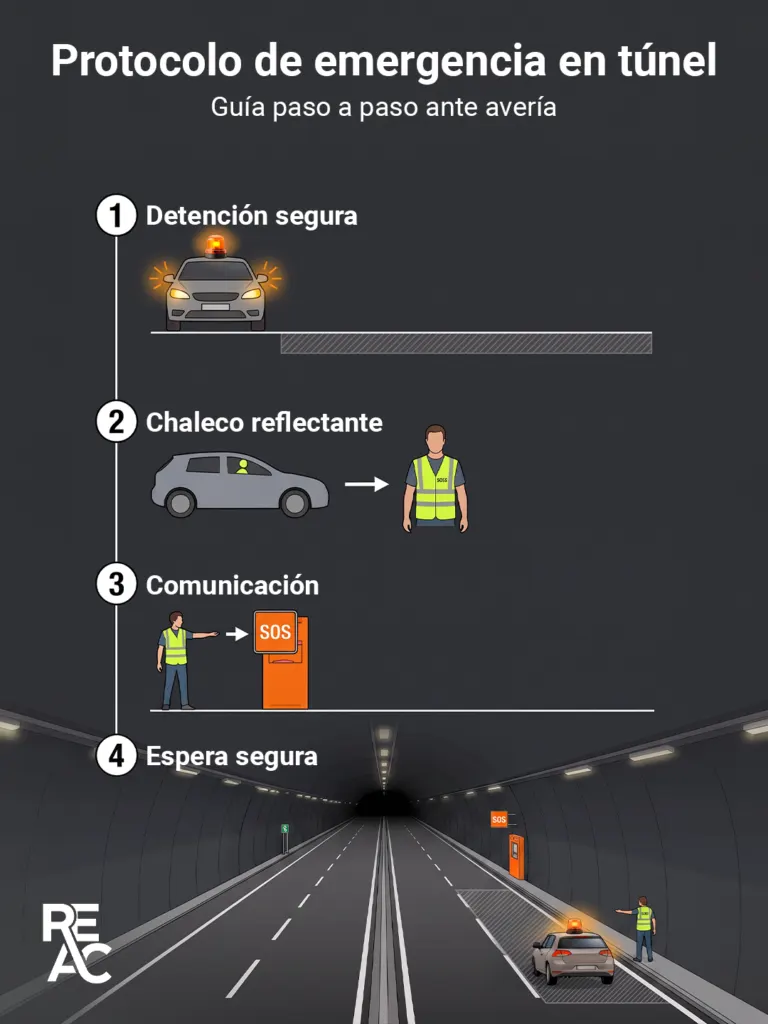
4-step emergency protocol for drivers
- Signal and stop safely: Switch on your hazard warning lights immediately. If the vehicle still has momentum, try to steer it into an emergency lay-by or pull over as far as possible to the right-hand edge of the carriageway.
- Switch off the engine, keep the lights on: Turn off the ignition but leave the sidelights on to ensure the car remains visible to the tunnel's control and lighting panels.
- Protected evacuation on the safe side: Put on your reflective vest inside the car. Leave the vehicle using the door away from the traffic and head to the emergency walkway or nearest evacuation exit.
- Report preferably using an SOS post: Whenever possible, use the physical emergency points (SOS posts) installed on the tunnel walls instead of your mobile phone. These units notify the Traffic Control Centre directly, with georeferencing, of the exact position of the vehicle.
The intervention of rescue vehicles
Once the alert has been received, roadside assistance units activate a protected approach protocol. The use of high-intensity warning beacons and coordination with traffic officers make it possible to isolate the affected lane in order to remove the stranded car as quickly as possible, restoring the flow and safety of the infrastructure.
Prevention is the best tool when travelling
Check the condition of your vehicle regularly and read the rest of our road safety guides and articles on the REAC Blog.